Buying a fresh physical answer
FieldProof lets software pay a device operator for a new physical reading, then verify the device’s signed reply. I built the firmware, payment gateway, and browser verifier for a Colosseum hackathon prototype.
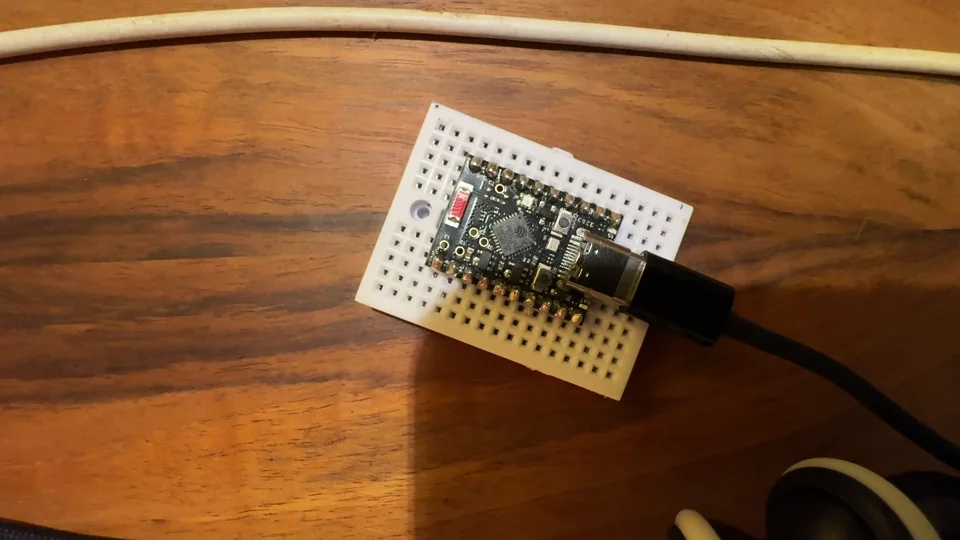
The demo uses a real ESP32-C6, with its button standing in for a physical contact. A Solana devnet payment settles before the board takes the requested reading. The buyer checks the device identity, request, signature, and age before using the answer.
What I built
- Device firmware. Input sampling and signed observations on the ESP32, connected through a Python Bluetooth bridge.
- The purchase flow. An x402 gateway that pays the operator in test USDC before requesting a measurement, with a ledger to prevent duplicate settlement.
- Independent verification. A browser verifier that rejects changed or expired answers. Reviewers can inspect recorded evidence without a wallet.
- The peaq integration. A registered device-key check before payment and a linked job hash recorded on the Agung testnet.
A valid signature can still be too old
Payment remains confirmed after a reading expires. Keeping those states separate was the central design decision: a successful transaction cannot make old information useful again.
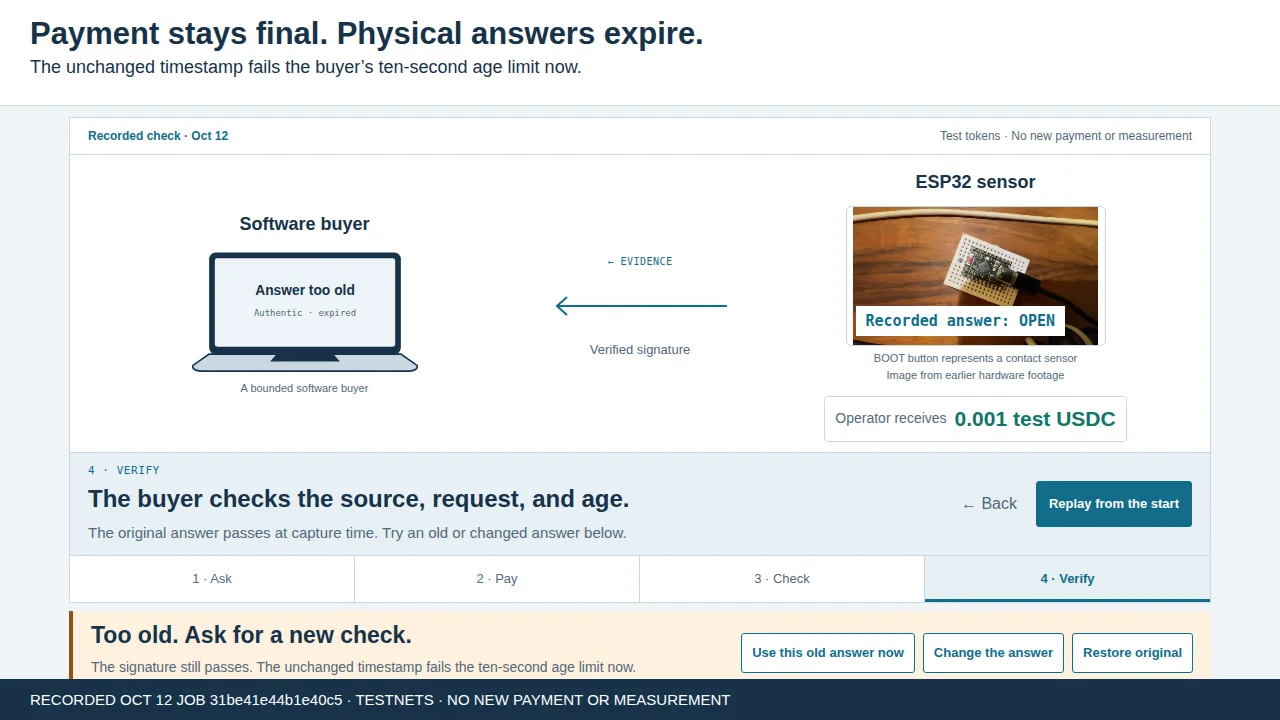
This is a hardware and testnet prototype. The public demo replays recorded evidence and starts no new payment or measurement. A signature identifies the device’s claim; installation trust and commercial demand remain open questions.
Recognition
FieldProof placed second in the peaq partner track at Crypto World’s Fair, announced by Superteam Germany in October 2026.